

When Should Brake Rotors Be Replaced?

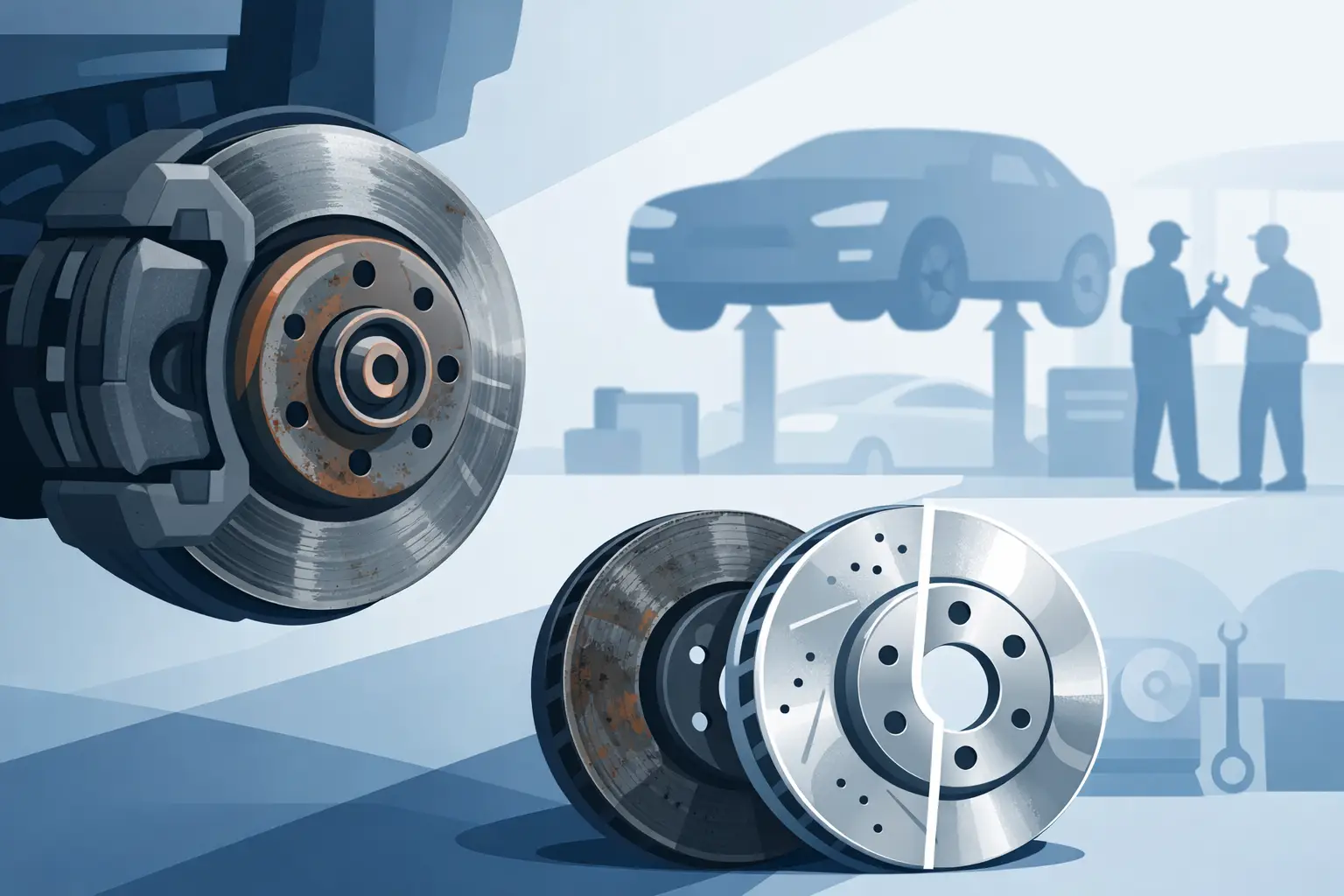
A lever that feels longer at turn-in, a pulse under hard braking, or a rotor face that looks heat-checked after a few aggressive sessions – those are the moments riders start asking when should brake rotors be replaced. On a high-performance sport bike, rotor condition is not a cosmetic detail. It directly affects braking consistency, pad life, lever feel, and confidence when you need to shed speed fast.
For track riders and performance street owners, the short answer is simple: replace rotors when they are below minimum thickness, cracked, badly warped, unevenly worn, or no longer delivering stable braking under load. The longer answer matters more, because not every vibration means the rotor is done, and not every worn-looking disc is unsafe. The right call comes from measuring, inspecting, and matching the rotor’s condition to how the bike is actually used.
When should brake rotors be replaced on a motorcycle?
Start with the manufacturer’s minimum thickness specification. That is the hard limit. If a rotor measures at or below the stamped service limit, it is done. No debate, no extra session, no “one more weekend.” A thinner rotor sheds and stores heat differently, loses structural margin, and becomes more prone to distortion under repeated heavy braking.
That matters even more on bikes seeing track use. A casual street rider may go a long time before reaching that limit. A rider braking deep on a 600 or liter bike, especially with race pads and sticky tires, can accelerate rotor wear fast. Heat cycles, aggressive pad compounds, and repeated high-speed stops all compress the timeline.
The second trigger is damage. Surface scoring can be normal, but deep grooves, blue hot spots, cracking around drill holes or rotor buttons, and obvious distortion are not. Floating rotors also need attention when the buttons bind, rattle excessively, or stop allowing proper movement. A rotor can still be above minimum thickness and still need replacement because the braking surface or carrier system is no longer stable.
Thickness is the first real test
If you want a clean answer to when should brake rotors be replaced, measure them with a micrometer. Visual guesses are not enough. Check several points around the braking band, and avoid measuring on a lip if one has formed at the outer edge.
Rotor thickness variation matters almost as much as absolute thickness. If one section is noticeably different from another, you can get pulsing, inconsistent pad transfer, and unstable lever feel. Some riders call this a warped rotor when the issue is actually uneven material transfer or localized wear. The symptom is similar. The fix is not always the same.
On most performance motorcycles, the service limit is stamped directly on the rotor carrier or listed in the service manual. Use that number, not a generic rule. Brembo-equipped superbikes, OEM street setups, and lightweight race conversions can all have different thickness specs. Precision matters here.
Signs a rotor is wearing out before it reaches the limit
Not every failing rotor announces itself with dramatic vibration. Sometimes the warning signs are subtle at first. The brake lever may feel inconsistent from one corner to the next. Initial bite may still be there, but the bike loses stability deeper into the braking zone. Pads may wear faster than expected, or one pad may show uneven contact compared with the other.
Heat marks are another clue. A light change in color is not unusual after hard use, but dark blue patches, visible heat spotting, or a smeared appearance on the braking track point to excessive thermal stress. That can come from riding style, poor pad choice, sticky calipers, or simply a rotor that has reached the end of its useful life.
Noise can matter too, but it is less definitive. Some high-performance pads are noisy by nature. A scraping sound paired with scoring, pulsing, or visible damage is more meaningful than noise alone.
Warped rotor or pad transfer?
This is where riders often replace parts too early or too late. True rotor warping exists, but uneven pad material transfer is also common, especially after repeated heat cycles or improper bedding. Both can create pulsing at the lever.
If the rotor has excessive lateral runout, measured with a dial indicator, it may actually be distorted. If runout is within spec but braking still pulses, pad deposits may be the issue. In some cases, careful cleaning and re-bedding with compatible pads can restore consistent braking. In others, the rotor surface has become too uneven or heat-damaged to recover.
Track riders should be especially careful with pad and rotor pairing. An aggressive race compound on a rotor designed more for street temperature ranges can create accelerated wear or erratic transfer layers. The setup has to work as a system.
When resurfacing is not the answer
On cars, resurfacing rotors used to be common. On modern motorcycles, especially performance machines, replacement is usually the smarter move. Motorcycle rotors have less mass to begin with, tighter service margins, and a much higher sensitivity to thickness variation and heat behavior.
Machining a rotor removes material and brings it closer to the discard limit. Even if you clean up the surface, you may reduce heat capacity and shorten the part’s remaining life. For a street commuter, maybe that trade-off looks acceptable. For a bike that sees canyon runs, advanced road riding, or track days, it usually does not.
If the rotor is already near minimum thickness, has visible heat stress, or shows cracking, resurfacing should not even be in the conversation. Replace it and move on.
Riding style changes replacement timing
A street rider who brakes smoothly and uses mostly highway miles may get long service life from OEM rotors. A club racer on slicks with race pads can wear through rotors much faster, even with proper maintenance. Same motorcycle, completely different brake environment.
Bike setup plays a role too. Heavier riders, high-grip front tire choices, ABS intervention on the street, and late-braking habits all add stress. So does poor cooling after a session, dragging brakes in the paddock, or parking the bike hot with the pads clamped against one rotor area.
This is why fixed mileage advice is weak. There is no universal rotor replacement interval that means much on a performance motorcycle. Condition beats mileage every time.
How to inspect rotors the right way
A proper inspection is quick if you stay consistent. Measure thickness at multiple points. Check runout if you feel pulsing. Look for cracking near drilled holes and along the outer edge of the braking track. Inspect the rotor buttons on floating designs for free movement without excessive slop. Compare pad wear side to side.
Also inspect the full brake system before blaming the rotor. Sticking pistons, dirty buttons, worn wheel bearings, bent mounting surfaces, or uneven pad deposits can all mimic rotor problems. Replacing discs without addressing the root cause can waste money and leave the symptom in place.
For riders who demand repeatable braking, this is where premium parts earn their value. Better metallurgy, tighter tolerances, and stable floating hardware generally hold up better under repeated heat cycles than budget components. That matters when braking feel is part of lap time, not just road safety.
Replace both rotors or just one?
If the bike has dual front rotors, replacing both is usually the right move unless one is nearly new and the other was damaged by a separate issue. Matching thickness, friction behavior, and heat response across both sides keeps the front end more balanced under load.
The same logic applies to pads. New rotors should get fresh pads unless the current set is effectively new and confirmed compatible. Used pads can carry an uneven transfer layer onto the new rotor surface and compromise bedding from the start.
For riders upgrading instead of simply replacing worn stock parts, this is also the cleanest moment to move into a higher-performance rotor and pad package. AXF Race Parts serves exactly that kind of buyer – riders who want fitment-correct, race-proven braking components without wasting time sorting through generic inventory.
The real answer comes down to margin
If you are asking when should brake rotors be replaced because something feels off, do not wait for a dramatic failure. Brakes rarely reward hesitation. Once a rotor is below spec, cracked, heat-damaged, or inconsistent under load, replacement is the performance decision as much as the safety decision.
A good rotor gives you stable lever feel, predictable deceleration, and the confidence to brake where you intend to brake. When that margin starts disappearing, the part has already told you what it needs. Listen to it before the next session does.