
Are Race Fairings Worth It for Track Riders?

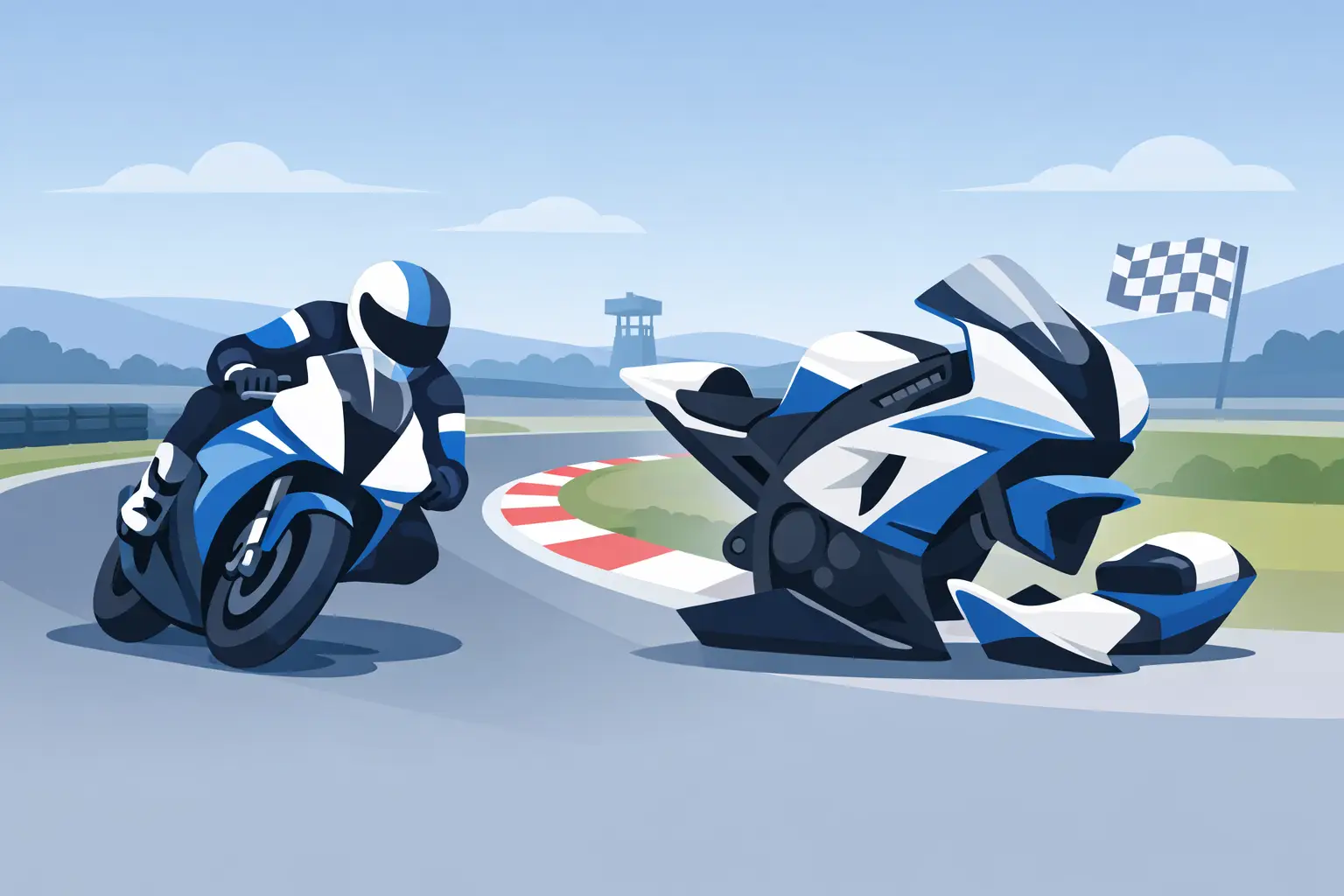
A lowside that scuffs an OEM side panel, cracks a headlight surround, and damages mounting tabs can turn one missed apex into a four-figure repair. That is the practical reason riders ask, are race fairings worth it? For dedicated track bikes, club racers, and riders converting a street sport bike into a track machine, the answer is usually yes. The value is not just appearance. It is crash economics, easier service access, race-rule compliance, and a cleaner path to a purpose-built motorcycle.
For a street bike that sees an occasional track day and still needs lights, mirrors, and factory finish, the answer is more conditional. Race bodywork requires commitment. You may need to remove street equipment, install a race stay, drill mounting points, and accept that race fiberglass does not have the showroom fit and paint quality of OEM plastic. The right decision comes down to how the bike is used and what a crash, repair, or conversion is likely to cost.
What Race Fairings Change on a Track Bike
Race fairings replace the motorcycle’s original street bodywork with lighter, track-focused panels. Most quality kits use fiberglass or composite construction and are designed around a specific make, model, and year. They typically include a race upper, side panels, lower belly pan, tail section, and front fender. Depending on the application, a kit may also require a dedicated race fairing stay, mounting hardware, or separate air ducts.
The key change is that race bodywork eliminates street-only components. Headlights, turn signals, mirrors, license-plate hardware, and bulky OEM inner panels are no longer part of the package. That reduces complexity and helps create a bike that is easier to inspect between sessions.
A proper lower fairing also serves a safety function. Many track organizations require an oil-retention belly pan capable of containing fluids if the engine, oil cooler, or filter is damaged. Do not assume every lower is automatically approved. Check the rulebook for your organization and verify the capacity and drain-plug arrangement before arriving at tech inspection.
The Biggest Benefit: Lower Crash-Replacement Costs
Factory bodywork is engineered for a street motorcycle. It integrates lights, clips, ducts, painted finishes, decals, and delicate mounting tabs. It looks excellent, but it is expensive to replace. A simple fall can damage multiple pieces at once, and the labor involved in stripping and reassembling the front end adds up quickly.
Race fairings are built for a different job. They are intended to be repaired, refinished, and replaced without rebuilding every street function around them. Fiberglass can often be patched after a minor slide, especially when the damage is limited to a corner or mounting area. Even when a panel needs replacement, the cost is generally more controlled than sourcing several OEM painted pieces.
That does not mean race bodywork is indestructible. A hard impact can crack fiberglass, bend brackets, and damage the motorcycle beneath the fairing. The point is risk management. If your bike is going to spend regular time at track days or on a race grid, it makes little sense to repeatedly expose high-cost OEM plastics to the environment where lowsides happen.
Race Fairings vs. OEM Bodywork
OEM fairings win on finish quality, exact panel gaps, street equipment integration, and day-to-day durability. They are the correct choice for a road bike you want to keep original, sell in stock condition, or use for commuting and canyon riding. Factory panels are designed to fit around every production component, including lighting and emissions-related hardware where applicable.
Race bodywork wins on track utility. It can reduce weight, remove unnecessary parts, provide fluid containment, and make repairs less painful. Most race kits arrive in an unfinished gelcoat or primer-ready state, which gives you the freedom to apply your own paint, number plates, team graphics, or sponsor layout.
Fitment is where buyers need to be realistic. Premium race fairings designed for a precise model application should install cleanly when the bike has the correct brackets and hardware. But race bodywork is not usually a plug-and-play replacement for every OEM panel. Expect test fitting. You may need to trim openings, drill fastener holes, align the lower around the exhaust, or adjust mounting points. Those steps are normal in a race build, not automatically a sign of poor quality.
Weight and Aerodynamics: Useful, but Not the Main Reason
A race fairing kit can reduce weight compared with complete OEM bodywork, especially once lighting assemblies, mirrors, brackets, and street hardware are removed. The real-world difference varies widely by motorcycle and build specification. Do not buy bodywork expecting it alone to transform braking points or lap times.
Aerodynamics are also more nuanced than a product photo suggests. A well-designed race upper and screen can improve rider protection from wind and provide a stable cockpit at speed. However, the motorcycle’s aerodynamic behavior depends on the full package: screen height, rider position, clip-on placement, seat setup, air ducts, and how securely the panels are mounted. A loose fairing or poorly aligned windscreen does not help performance.
For most track riders, the measurable advantage is consistency. A stripped, organized cockpit makes it easier to focus on braking markers, body position, and throttle control. The fairings support the race setup rather than replacing rider development or suspension tuning.
When Are Race Fairings Worth It?
Race fairings make strong financial and practical sense when your sport bike is track-only, race-prepped, or expected to see frequent track use. They are especially worthwhile if you have already removed road equipment, installed rearsets and clip-ons, fitted race controls, or committed to tire warmers and regular track weekends. At that point, keeping OEM panels on the bike is often the expensive compromise.
They are also a smart move for riders who want to preserve original bodywork. Removing clean OEM plastics, wrapping them safely, and installing race fairings lets you return the motorcycle closer to stock later. That can protect resale value and gives you a cleaner separation between your street-bike parts and track-bike parts.
Race fairings may not be worth it for a rider doing one or two novice track days per year on an otherwise stock street motorcycle. Frame sliders, case covers, axle protection, and careful preparation may offer better immediate value. If the bike remains street registered and you do not want the work of converting it before each event, OEM bodywork is simpler.
Choosing a Kit That Will Not Create Problems
The lowest-priced kit is not always the lowest-cost option. Poorly made bodywork can require excessive trimming, develop cracks around mounting points, or fit badly enough to consume hours in the garage. A better kit saves time during installation and makes post-session maintenance less frustrating.
Before ordering, confirm the exact model year and trim. A small revision to a front stay, ram-air duct, fuel tank shape, or tail subframe can change compatibility. Also establish what the kit includes. A race upper may not include a windscreen. A tail may require a separate foam seat pad. Fasteners, Dzus clips, brackets, and air ducts are often separate items.
Look closely at the mounting system you intend to use. Quarter-turn fasteners are popular because they speed up fairing removal for oil changes, wiring checks, and crash repairs. They also require careful initial installation. Reinforce high-stress mounting areas when appropriate, use quality hardware, and avoid overtightening fasteners into fiberglass.
For riders building a complete track package, AXF Race Parts makes it easier to source model-specific race components alongside controls, braking upgrades, rearsets, and paddock equipment. The goal is not to add parts randomly. It is to build a motorcycle that is reliable, serviceable, and ready for repeated hard use.
Installation Details That Matter at the Track
Test-fit every panel before paint. Install the upper, sides, lower, tail, screen, and seat pad with the bike on stands, then check clearance at full steering lock and around the exhaust, radiator, front tire, and rear wheel. If you run aftermarket rearsets, an exhaust system, or an oversized radiator, confirm that the fairings still clear those components.
Secure the oil filter and drain plug as required by your track organization. Make sure the lower fairing can be removed without turning routine service into a major job. It is also wise to apply heat shielding near exhaust sections and protect vulnerable edges with trim where needed.
Paint last, after holes are drilled and all alignment work is complete. A clean paint job is valuable, but a fairing that can be removed quickly after a crash or between sessions is more valuable on a working track bike.
Race fairings are worth the investment when they match the motorcycle’s mission. If you are building toward more track time, protecting your OEM panels, and making maintenance faster, they are one of the most sensible upgrades you can make. Buy for correct fitment, install them carefully, and let the bike earn its scars on replaceable bodywork rather than factory plastic.